Monday, July 16, 2012

Very Briefly, Upon Hearing Bach's, "Kyrie," From The B-Minor Mass For The First Time.


"What am I hearing?" I thought.    No joke.   "What the hell am I hearing?"  

Now, I know that sounds angry.   It was not.   It was astonishment.   And, as much as I would love to share that astonishment with you, words will fail.   But I will try to describe the extraordinary transformation that took place.   A transformation not only within me but OF me.   I was transformed and have not been the same since.   Such was the power, beauty, and sublimity of the music.    And those words do not suffice.  

Now bear in mind, I have been listening to and studying serious classical music for decades.   The exhilaration of the sublime is not new to me, upon hearing a masterpiece for the first time.  I have known it as caused by all the great composers, from Josquin to Stravinsky.   I have been brought to my knees, to tears, to shouting, to jumping up and down, because what I had heard was so indescribably exciting and magnificent that I could not contain myself.    It has happened many times.    And many times, it has changed me.

But not like this.

I'll never forget the first time I truly felt a "connection," -- that is to say, I felt I "understood, Stravinksy's brilliant ballet, "Les Noces."    Overwhelming, truly.  I can truly say it was like the sun for the first time.   A combination of awe and weeping.   Not unusual.  Mahler, Strauss, Verdi, Mozart, all, at one time or another, presented themselves to me and elicited that reaction.    My God, the hours I've spent weeping, marveling, meditating on Chopin's music is absurd.   A lifetime.   And it never fails to surprise.  

But not like this.

For Bach's "Kyrie," is not a work of musical arts.   Well, it is, but it is so much more that to label it as such, so severely limits the inherent meaning of the work as to make it trivial.  Yes, trivial.    To say that this piece is a great masterpiece of music is to trivialize it!    Amazing.

So, you ask, what the hell is it?

Well, to try to answer this, I would have to begin by saying that it is not any ONE thing.  Or two things.   It's a bunch of things.   A whole big bunch.    A whole big fat bunch.   I hope I'm not losing you with my detailed technical description.    Bach has created something that upon which can be placed no label.   Many labels, perhaps, but they do not capture the whole.

If such a thing is possible, it is a musical manifestation of the truly sublime.   It is sacred, but not religious.  

Speaking from a strictly "musical" standpoint, if such a thing is possible,  there is meaning here that defies categorization unlike other music.   It begins with a statement by the huge five part chorus (there are two soprano lines)  that simply presents a theme in the highest voice, a la a chorale, but full voiced, non-rhythmic, really, more like a fanfare, or warning, or at least of the most serious profundity that one cannot but help but thinking, we have entered another world here.   We are being told to "fasten our seat-belts," for a journey, an exposition, a exploration of worlds unknown, of places unseen, places of the deepest possible significance.  

This if followed by . . . what?    A kind of orchestral concertato-fugal exposition of themes that is neither a concerto nor a fugue.   It is something "other."   The chorus enters with the words of the, "Kyrie," in replication of the orchestral exposition but only as a starting point as we the development takes us far  from where we've been, we do not know what to expect and cannot be sure where we are.   It seems endless, but we do not care as the main theme is somehow, always present, as a compass for anchor of our hearts and minds.  Such extraordinary metamorphosis demands details analysis, but this is not the place for that.   However, such analysis will reveal that no matter how strange the scenery, how distant the shore, everything we hear comes from that original theme.   It gives the work an amazing homogeneity, a "oneness," that bespeaks a single force greater than ourselves.

In  its inability to be labeled, placed within a preexisting formula or structure and given the complexity of its material, the experience is transcendental.    We are led inevitably to an encounter with the Godhead, to the fount of the Divine, the eternal.    


And we are blessed.  


Blessed by the music, by Bach, by the Muse, by Artinto, by God himself, as if He wrote the piece; and blessed by that awareness being given this glimpse of the awesome glory Grand and Universal Truth.


Saturday, July 14, 2012

On Poe's, "William Wilson."

". . .and to the very ends of the earth I fled in vain."


To those of us brought up with Poe from an early age the name is filled with magic, the magic of a world filled with the mysterious, the profound, the tragic, and the beautiful -- all the elements of Romantic art in its quintessential form.   Sometimes we experience these elements simultaneously in Poe, sometimes not.  We love Poe because we think we understand Poe, or because we know we do not; yet at the same time he speaks to us.   He means, this, or he means that.    This story means this, or this story means that, or all of them together, or none of them together.   Again, quintessentially "Romantic." 

The darkness of Poe is much more compelling than the brightness of Wordsworth, despite the latter's more refined edge.    Poe is not refined; he is out of the earth itself, of nature, of the primal and primordial, always  flitting around the memory of a brutish past.   Yet, always present is the struggle for beauty, for justice, the attainment and love of beauty, always just beyond reach, perhaps, but there, nevertheless, and Poe loves and pursues it with all his passion.  His passion for beauty and logic do not always triumph, but the triumph of the Romantic is the fight.   And we, being romantics ourselves, identify very powerfully with that struggle and with that loss.    

Thus so complex in its essence, and such diverse elements of the human psyche so exploited,  the reading of Poe must result in a multitude of diverse interpretations of meaning.   And, more often than not, he works are completely misunderstood.    I read, with either great humor, or revulsion, reviews and analyses of his work.   It is difficult (not impossible) to find pointed and revealing criticism of Poe's work.   My attempts often fall short.   Where I believe I achieve success is not through intellectual acuity but through sheer luck and the ability of Poe to speak to me through the page and over time.  There is also my affinity for the age: the music of Chopin, Schubert, and Mendelssohn have always spoken so clearly to me, as does so much of the contemporaneous literature and philosophy.   I am of that age, it would appear.   There remains, still, so much of Poe that I do not "get."  Someday, perhaps, I will.    


But for now, there is, "William Wilson," a masterpiece of the romantic literature.  

The story involves so much.   As the music of Brahms, or Chopin, Poe's story is precisely of his time, more specifically, it speaks of the style and philosophy of his age that of Romanticism.   The artist, forced to live in a world that continually misunderstands him, and from which he continually tries to escape, but cannot.   He then turns inward, away from the masses, the audience for his art, the world of "reality," for that world has turned away from him.    The Age of Enlightenment brought audience and artist together, on equal footing, so to speak, and they were both happy and thrived there.    But with the Romantic "revolution" the artist and audience are separated, the artist forced to find inspiration from "outside," of the "world."    As I said, he turns inward and turning inward he finds the source for all that is grotesque, brutish, ugly, and beautiful, lovely and refined.   So, Poe's William Wilson takes us on such a journey, within the mind of the artist using symbols and metaphor, to "a time before time itself was born."   In other words, Poe stumbles upon the Id, the hideous, frightened, barbaric, remnant of what we all once were, ready to kill to preserve one's life. 

Poe ingeniously combines this metaphor with the age old folk belief of the "Doppelganger," the "Double," which says that we all have a double, an exact duplicate of ourselves somewhere in the world, and you must avoid this double for if you do not, you will be annihilated.   For Poe, (Wilson) that double exists in a place from which there is no escape, it lives within the mind itself.  One flees in vain.  The Doppelganger, once unleashed (or discovered), spells inevitable doom.

(I am reminded of the brilliant early science fiction film, The Forbidden Planet.  What is the Forbidden Planet, but that place hidden deep within us, our "Id," as the doctor discovers?   Do not tread there, lest you unleash, "Monsters. . .  monsters from the Id.")   

I will say no more here, I wish you to be intrigued and discover the many details in the story  on your own that I have not discussed here.  You may discover more.   But beware.   Beware!

Let me know. 


High Summer *

 * * * 

(Summer, the remote past)

I rode my bicycle the same route everyday feeling that I was safer that way.   So familiar had the streets become that I knew every crack in every road and street.   And the houses, and the trees and everything else within view of seven-year-old boy on a bike, I knew them all.

 Back then, Staten Island still had a feel of the rural about it, a sense of timeless age, of creaking wooden objects of ancient trees and the rhythm and continuity of life.  Here and there fields lay open and seemingly unchanged, probably, since the time of the local Indians, through the the time of first Dutch settlers, and beyond.    This rendered it a feeling of great age and antiquity, that here was a place that remained unchanged since anyone could remember or knew.  I lacked the knowledge of history to think in these terms but nevertheless I felt it.   Strongly.   But that was not all nor was it the most powerful sensation I received while riding my bike in the midsummer countryside.  

That was of summer itself.  

 In spite of the houses, the proximity to a major metropolitan area, and businesses here and there, or a large shopping center up on Hylan Boulevard just a mile away, there was a strange and wonderful silence to those midsummer afternoons.   You all know it, I'm not telling you anything new.   But that I was aware of it so intensely as a small boy strikes me now, so many years later, and speaks of something within me, within my deepest soul, or subconsciousness.   It was there when I was born, I'm sure if it.   I am unable to label it—it is a kind of awareness to my surroundings, no—more of a “sensitivity” that allowed me to spend hours pondering the otherwise most insignificant objects or scenes or nature.   There was a power outside and inside of me in certain situations that was overwhelming and over which I had little control.    A midsummer day, in the countryside, under a clear blue sky and soaked in the suns blazing light, was one of the most powerful.

What was it I wrote?   The silence of midsummer?  Not at all, really.   Again, at that age I did not have the words but I knew to think that there were sounds and sounds upon sounds, and interruption of sounds all around and yet, at a certain time of day, when the sun was strongest, it all seemed silent.  And in that silence I thought I found something within me, in fact, the more I contemplated my environment, the sun on the trees, the cracks in the road, the sound of wind in the tall reeds, the more I was discovering what was deep inside myself.   Maybe, it was what was inside me that created the things I noticed or at least gave them their power.   That within me lay the entirety of all I observed, that it was a reflection of some inner reality.  .  . 

I did not think it then but now I know I was experiencing a kind of joy.

* * *

A single dragonfly floated in the hot air around us.  My older cousin, Anthony, and I watched it in happy silence as it landed on a reed that swayed gently in the still and tranquilizing breezes.    

We were standing high up on a large rock just at the edge of a vast swampy area that formed just before the beach.  We shaded our eyes as we looked out onto the distance, past the swamp, to the shore, then further out to the ocean and to the horizon beyond, and even beyond -- to the infinite.  

The sky was wide and blue above us, and cloudless.   Again, a kind of lazy silence hovered in the heat over all.   I looked and tried to observe and absorb it all.   I wanted to name this special moment.   What was it?  What was it that all these things, the heat, the dragonflies the silence, breezes off the shore, the great distance...what was it, that they, when combined together, formed?  I broke the silence to ask my cousin, who did not alter his searching pose or even move a muscle.

We were, I think, in what seemed like a mild hypnotic trance induced by the soft buzzing of bee and the darting dragonflies, the swaying of the tall reeds and the motion of the restless shore.  And the heat, the sun's blazing, omnipresent, heat.   

We stood, motionless and silent for quite a while in the unbroken and eternal stillness. . .such stillness. . . on and on. . . the perpetual sweet summer silence . . we must have lost sense of time and place, all things melting  together into one eternal moment. . . (would that I could have truly made that moment eternal).

"What is this?” I asked him as he, too, tried to take it all in. “What do you call this?” thinking that, altogether "this" must have a name.    

"High summer,” he said, never breaking his stare. 


* * *

*Copyright 2010 (jc) 

Friday, July 13, 2012

On Thomas Hood's, "I Remember, I Remember."

Thomas Hood was a British poet, playwright, and humorist of some genius who lived during the first half of the 19th century.   He is known most popularly today, if he is known at all in this television-zombied culture, for a poem entitled, "I Remember, I Remember."  

It is a sentimental poem, to be sure, but it not without some depth and even a degree of the profound behind the simple words of childhood reflections.  When I first read it at a teen ager in High School, I thought little of it.  It did not speak to me as other poems had, or other works of literature.  It seemed too simple and almost childish, for its not so gentle tugging at the heartstrings, its cheaply sentimental and superficial emotional life.

Of  course I thought this.

I came across the poem again recently and realized that this is a poem that should not be taught in High School, nor even in college, for its meaning cannot possibly be understood without some good measure of a lifetime having been lived.   One is much too close to one's youth in High School, and what is needed here is perspective.   This is what the poem is about and what the implications of perspective are.   It is not a simple, sentimental, or cheap emotional tug at heartstrings.  Oh, no.  It is much more than that.   Beside the beautifully simple use of the language (this is no simple accomplishemnt)  the meaning of the whole is layered with deep, even darkly thoughtful tones.  

* * *

I REMEMBER, I REMEMBER

I remember, I remember,
The house where I was born.
The little window where the sun
Came peeping in a morn.
It never came a wink too soon
Nor brought too long a day;
But now, I often wish the night
Had borne my breath away.


I remember, I remember,
The roses red and white.
The violets and the lily cups--
Those flowers made of light!
The lilacs where the robin built
And where my brother set,
The laburnum on his birthday,--
The tree is living yet!


I remember, I remember,
Where I was used to swing.
And thought the air must rush as fresh,
To swallows on the wing.
My spirit flew in feathers then,
That is so heavy now,
The summer pools could hardly cool
The fever on my brow.


I remember, I remember,
The fir-trees dark and high;
I used to think their slender tops
Were close against the sky;
It was a childish ignorance
But now tis little joy,
To know I'm farther off from Heaven,
Than when I was a boy.

* * *

No question, a delightful poem, filled with the fondest memories of a youth well-lived, and images kept real and alive of moments of great meaning and lasting memory.   But we must ask, "What else is in the poem?" or the poem is nothing.

Let us note the subject matter of each stanza:   We are first told that this is memory.   "I remember, I remember," -- a double pronouncement, as this is a crucial point.   The poet almost shouts, "note this!" by repeating it:  memory is being revived and that has much meaning, as does the act of remembering itself.  It takes focus, and concentration and most of all, will.   Taken together what we have here is more than an expression of thought but a meditation upon memories, their subject and the meaning.

Note that each stanza then gives us a memory involving the stimulation of some sense or another, the most powerful kinds of memory!  The brightness of the sun, the sight and smell of the roses, the exhilaration of the swing and the rushing of air against the skin, and finally, the contemplation of the wonder of the height of the fir-trees.   The flowers are such strong remembrances that they evoke another memory, that of his brother's planting a tree so long ago, among the lilac trees.

But pointedly, we are, in each stanza, brought immediately back to the present.   It is almost an intrusion but, it seems, a necessary one, for this is a meditation, and one must allow the thoughts to associate in any way they wish.   First the length of the day reminds the poet that in the present, he often wished his own death during the night.   The planting of the tree reminds him, with a hint of surprise, that the tree, after so many years, still lives.  Is the implication that the dear tree will probably live long after he is gone?     An analogy is made between riding on the swing and his soaring spirits, how they, "flew in feathers," back then, but today, oh, no, they are too heavy with the burdens of life and the passage of time.

Finally, he recalls reaching toward heaven in the contemplation of the height of the fir-trees, which reminds him that he now lives his life knowing that although Heaven was once well within his provenance, today, alas, Heaven may be forever out of reach, and he fears for his eternal soul. 

The poem thus begs us to contemplate the condition of our own souls.

A light and sentimental poem?

Thank you, Thomas Hood!

~ THOMAS HOOD ~
1799 - 1845  


_______________________________________________________________________

Why Pick On Greenwich Girl So Much?

Someone finally asked me why I mock GG so much and with such gleeful vulgarity.   My answer: someone has to do it.  I, apparently, am the only one with enough courage, commitment, and honor to take up the gauntlet.  I am also probably the only one who reads her crappy blog.   But Oh!   There's so much more.

She is the reason the country sucks.  She is the quintessential self-styled leader of privileged skanks.  Admit you know them.  They who without moral or ethical compasses, without a sense of conscience or social awareness or responsibility, without the stuff of previous generations, (personal integrity, societal  responsibility)  whose God is fashion, and whose faith is the dogged pursuit of the satisfaction of the self, mock all that is sacred.    These are the enemies of Western Civilization, of Reason, of Intelligence, in short, of all that America was based on,  the traditions of Ancient Greece, Rome, and our shared Judaic-Christian past.  They are the minions of the Devil himself.

And do not fool yourself into defending GG with platitudes like, "Oh, it's just fun!"

No.   It is not.    It is the screeching cry of ignorance with a blog.   It is the calling card of the corruption of a once sophisticated, responsible, and erudite upper middle class that is now dissolved into an amorphous mess of greed, avarice, and crude emptiness.   It is "white trash nation," raised to the level of what once was the American Dream.

I have met this Girl from Greenwich.  She doesn't remember it, but we did meet.   Based on the behavior of another member of her family I should not be surprised by her lowness.   The brutal ugliness of that which gave birth to her would frighten you if I were to describe it.   It is demonic and in the purest sense, evil.   There is no reasoning with such a monster as this.   If you see it, run.  She is fully capable of creating a hell on earth for you.    "Beware the Harlot, the whore of Babylon."

But, you will say, she is so beautiful, and cute and sweet!

Yes, well, what form did you expect the devil to take when he comes?    A grotesque, ugly, mis-shapen  harpy?   A growling, snarling, snake-like viper, spitting out fire and poison?   It would be recognized for what it is immediately and so, rendered powerless.   Oh, no. . .  the beast will come in pleasing form, attractive and lovely to behold, promising all manner of good things.   Yes, the monster does this and we become ensnared by its superficial charm.  Then we are lost.

"Get behind me, Satan," is what we should all say whenever we are confronted by the beast.   But have we learned this lesson from so long ago, the lesson that is preached over and over, not only in houses of worship but in fiction and literature of every kind?   Some of us have.    But others of us, like myself, only learn after the devastation of the soul.   And we suffer for it for all time.

But you!   Behold!   It is not too late for you!   Hence, my attacks on it will go on.  I, undaunted and already lost, cannot lose again.

Save yourself.
_______________________________________________________

Note:  this essay is purely an exercise in fiction, and any resemblance to people living in Greenwich is merely a serendipitous coincidence.  
_______________________________________________________

What's My GREENWICH Girl Up To Now?!??

Well, with all the summer fun to be had to be had by our G-Girl, the dining under the stars, the boating, the beaching, the reading of "The Brothers Karamazov," (uh,  0just joking)  the party-on-the-yachting, the fun in the back seats of BMW's, how does she have time to keep us all so informed?

She does!   And, once again, we all benefit from the empty-headed, pampered, privileged avatar of the end of  civilization, reminding us, always, of the waste of self-indulgent ignorance.  

This time she has provided us with no less than a complete list of sales and shopping tips for the vapid blond idiots of the Greenwich.   And, apparently also for the NFG (Gg's cool and clever acronym for, get this, the "Not From Greenwich,").    The NFG takes up her parking spaces, eats her food, and makes all manner of trouble and inconvenience for the really chic, the residents of "gwich."    And, if you can get through this mind-numbing list of of shopping tips without vomiting you will glean insight into what makes a Gg tick.

Clothes!!

What else?

Except for that $100 bill that her next "customer," will hand her, nothing thrills like a good sale on overpriced white trash clothing designed for the narcissist who believes they deserve better than anything else.   Golly!   That's why we love her!

Anyway, if you've swallowed poison check out Gg's latest and you'll  be regurgitating immediately, without fail.

Keep it up, Gg!

Beaches!   Boats!   Parties!   Money for sexual favors!

Love my Greenwich girl!

Oh, mom, don't forget!   Always carry extra condoms!

Thursday, July 12, 2012

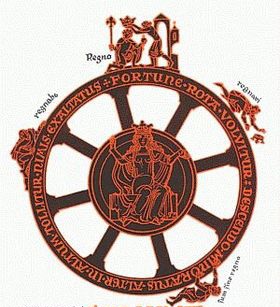
AVE FORTUNA, IMPERATRIX MUNDI!

or, 

HOW CAN THIS BE?  

I mean, this stuff really happened.  

1.  Dr.  R--,  stands out on this list, because I had already had experienced so many ridiculously similar events, I no longer thought something like this was possible.    I mean, how many times can this kind of thing happen?     Quite a lot, apparently, but not to most people.   Not to anyone I've known, and not to anyone that anyone that I've ever known, has known.     No, this particular set of occurrences seem to be unique to me, and no matter how unlikely a string of events these appear to be, they are, nevertheless true.

 And so, we stand back in silent and reverent awe, humbled and powerless, before the frightful and fantastic visage of Fortuna, Imperatrix Mundi.

Dr. R-- was the chairman of the Department of Music at a well-known college located along the Hudson River, not more than an hour's drive from NYC.    I had been referred to him by a professor at NYU who said he would be probably very glad to meet and, at least, know me.   I called.   He was remarkably friendly after hearing the recommendation from his colleague and said that he was looking forward to meeting me.   He even went so far as to say that there was a position available for which I seemed perfectly suited.   We set up an appointment for me to visit.   Very, very positive.

The day of the meeting arrived.   So did the largest blizzard in over 110 years.   Literally, not since the "Blizzard of '88,"  the blizzard of New York City lore and legend, about which volumes of books have been written,  not since that storm, had the northeast seen this combination of snow and wind.    Dr. R--, good man that he was, called me first thing in the morning.

 "I think we had better postpone our appointment," he said, with a chuckle in his voice. 

He couldn't commit to a date at that moment but said he would have his secretary call me the following week with a date, which she did.  It was for about two months later, steering well clear of winter. 

The date of the second appointment approached so I phoned to confirm.  I was told that Dr. R-- was not in, that he was quite ill and would probably have to call me back in the near future.

After some time I called again, at which time his secretary explained that sadly, Dr. R--- was still quite ill.    Judging from the ominous tone in her voice, I gleaned that it was quite serious.   Something inside me clicked into place, I don't know  how to describe it.   But at that moment, I knew I would never meet Dr. R--.    I was right. 

He  left the earth sometime that summer.   The position he wished to discuss with me, after all that time, had, of course,  long been filled. 

*

2.  Father P.

This one hurt.  The job combined so many of the skills I possessed, plus possibility of working in spiritual surroundings -- something I had often dreamed about.

 Father P. was the musical Director of the most prominent and important Roman Catholic Church in Manhattan.    I had just walked in off the street and went to the Human Resources department, where I met a lovely young Irish lass, Irene, who perked up when she heard I was a musician, conductor, pianist, teacher, etc.    "There might be something for you," she said, smiling broadly.

Quickly, she set up an appointment for me.   The "first appointment."   This was not with Father P, but with someone who worked with him, or somewhere within the music program.   He was a very large, jolly middle-aged priest.   He treated me in a friendly, polite manner and was thoroughly impressed by my impromptu performance of the last movement of Chopin's B-minor Sonata, which I played on the little piano in his large office.  

Things having gone well, I was told I would now be meeting with Father P; a date would be secured, but not right away.    In the meantime, he said, I may get a call to meet with someone else.   Fine.  I'll meet everyone and anyone.  I'll meet the Pope if he wants.  
The job, as described to me, was a part-time job assisting the "main man" in all manner of the Church's  musical business. This included rehearsing the chorus and teaching them new music.  I asked about  education, that is adult education music classes, and he was very interested.   Unbelievable.   He was enthusiastic!   "Might be a good way of increasing attendance. . ." he said.   I couldn't believe my good fortune.   I had years experience in such.  Finally, a job in my ken, my milieu, using my exact set of unique and quite prodigious skills!   I would also have some light administrative work, nothing heavy, usually, just making copies of scores or ordering new ones.   Not a big deal.   An ape could do that.   I asked about education, that is adult education music classes, and he was very impressed by my idea and by the fact that sacred music was an area of specialization for me. Unbelievable. He was even enthusiastic! "Might be a good way of increasing attendance. . ." he said. I couldn't believe my good fortune.


My good fortune, I thought, as I left his office. . . no. . . it couldn't happen again. . . come on. . . I shook off the bad vibes threw my shoulders back and marched into the sunlight on Fifth Avenue.

 The "Second Interview," arrived.    The large priest greeted me warmly, and again, a pleasant, and hopeful conversation followed, including a brief chat about our favorite Psalms.    He and I shook hands, as he assured me to look forward to a phone call.  

I did receive a call to meet another member of the church hierarchy.  

I arrived a bit early on the day of the appointment so I decided to visit my friend at Human Resources.    She met me in tears.

"What's wrong?"
 "Haven't you heard?   It's. . ."
 "Father P--," I interrupted, knowing, without knowing why.
"Yes, he's very, very, sick.   He's been. . . he's not. . .  everything is different." 

Yes, everything was different alright.   Not the least of which was my job, which had now been reduced to a part time temporary job, not in the music office.  Remarkable, how these things happen. Yes, I thought of myself first, before Father P's condition.    I honestly thought, "Not again," as Irene was crying in front of me.   

They did not think I was appropriate for that new position.  

I watched the memorial Mass for Father P. on television.  
  
*

3.  John R W

 There are no words to adequately describe my love and admiration for Professor W.   He was a man of unlimited brilliance, and possessed a depth of knowledge I still believe impossible for one human brain.    He was a gifted musician, composer, and teacher.   He was a wreck as a human, however.

Despite all the mean-spirited, and crude things said about JRW, he was to me, always a gentlemen and a good friend.   I had helped in out financially when he was going through some terrible phase about God knows what.    I didn't care.   He was my friend and mentor in many ways.  

When I decided to write my Master's Thesis I wanted JRW as my advisor.  He accepted, and I went to work.   It was difficult, time consuming work. I was not an "academic" writer or much of a thinker, really, and struggled to express myself.   Nevertheless, JR was extremely supportive and excited about what I was doing.   So much so, that he wrote to a colleague at Stony-Brook about me, saying that he (JR) had no doubt that I would produce a major tome on the works of Frederic Chopin.   I still have the letter.

Six months into my research JR disappeared.  It was the summer so it was not impossible that he just took a vacation.   But as summer ended I found out that he had been hospitalized down south, in or near his hometown.   His return was not imminent.

After much consternation and rumination, I thought it would be best to get a new advisor.   My only choice was a man for whom I had no, or little, respect for as a music aesthetician or historian, a key aspect of my thesis.   Of course, he was completely non-supportive of my thesis and had me change the gist of it (to something he was more comfortable with, I'm sure).   This was a disaster.  If I had trouble writing before, now, it was impossible.   He lost patience, as did I, and, after a particularly ugly interchange,  I left the building in disgust never to return. 

 A year later, I found myself at NYU enrolled in the MA program for music education a more wasteful way to spend one's money, I've never seen.  

A letter came.   It was from JR.   He was doing much better and was eager to help me.  He had heard about my problems with the other advisor and told me not to worry, he was going to get me into a teaching assistant post at Stony-Brook. 

My dear Prof.  W., sweet, cultured, tortured man that he was, died shortly thereafter rather suddenly while visiting his family down south.  

I miss him terribly to this day. 

Sleep well, JRW.   Sleep well.

*

ADDENDUM

But what other remarkable events shall I share with you?   The Chairman of a world famous conservatory of music who, while he was teaching at the college I attended, thought I was one of his most gifted students and who, after not seeing him for twenty years, suddenly became ill and had to retire, after promising to meet me to discuss the possibility of my obtaining a position at the Conservatory?    Or, should I speak of Prof. M?  Doctor L?   How about the conductor at. . . oh, you get the idea.

In 1980 everybody but everybody who was anybody was telling me to learn some computer program, word processing language or whatever it's called.   "You'll see!   Every office is going to filled with computers!" they said.   To supplement my salary while earning the Master's I thought, great, I'll do "temp" work--good paying jobs, flexible hours, etc.-- but first to learn the computer.   So I spoke to people in the field and settle on the new, booming, gotta have it, computer language called, "WANG."  Remember WANG?  Everybody, but everybody who was anybody was shouting:


"Wang!"  
All the experts said, "Wang!"
"It's the wave of the future, boy!"
"Wang!  Wang!  Wang!"   

I actually went to a school that taught Wang, exclusively.   It was a the way of the future.   They guaranteed work, money, women, cars, trips to India, everything.  Just sign here.  Two-hundred and fifty dollars seemed a small price to pay for all that.

My first job armed with Wang Knowledge was working for the Financial Director of Warner Brothers, on 51st.    Not bad.   What a nice guy too, a real regular guy.   Light work, lots of laughs, barely spent any time on the computer.

That was my last job that employed Wang.   You know what happened, don't you?    Look it up.  Wang.  And, like a bad vaudeville sketch, all those experts, were saying:
"Wang?"  Are you nuts?  
"Nobody's going to be using Wang in a year!"
"Wang! What a joke!  
"What's wrong with you?  Get out!!!"

You may as well then go ahead and picture me being grabbed by the back collar and being thrown out, landing squarely on my ass, onto the busy New York sidewalks.

In 1990 after a nasty incident with the Chancellor's nephew at Performing Arts High School (which I will discuss later on) I decided to chuck it all and work in the field I would really enjoy: travel.   I took a course in Sabre, the travel agents computer program for selling tickets, a must for anyone in travel.      Who knew?   Once again, all the "experts" said, no, screamed:

"Sabre!  You must learn Sabre!"  
"You wanna work in travel kid?  Learn Sabre."
"Sabre!"
Sabre!"


Once they took my money and I was prepared to attack, those same experts:

 "Sabre!  What's wrong with you?"
 "Idiot!  Sabre's old fashioned!"
"Nobody uses Sabre anymore!! Get out!  OUT!"  

Ass on sidewalk, maybe this time a pigeon craps on my hat.  Fade to black.   Hal Roach music up.

Never mess with a classic, they say.  
 

* * *

"Curtiss-Wright!" he shouted.   "Buy Curtiss-Wright!"

It was from someone whose opinion I trusted, so, I kept an eye on Curtiss-Wright over the next couple of weeks and every day it was up a little more.    Then, it went up 10 points, then 5  points, then 6 points!

Finally, with the only money I had managed to save, I purchased as many shares as I could.   I was sure I had a winner.

The following day in the Wall Street Journal, Curtiss-Wright Down 15 followed by the words, "Curtiss-Wright suspends trading. . ."   A lawsuit was filed by a Japanese company.    Then, over the following weeks (I refused to sell and take a huge loss) down 25,  down 17, down, down, down.

Most ironic, had a purchased the day before I could have largely minimized or avoided any big loss.    Had a waited one more day, I would not have invested.   No, I purchased the stock on the absolute singular worst day possible.

Of course. 


* * * 

But what of the dissolution of programs and institutions that existed, in some cases for 90 years, until, "the curse of J.C---" struck them down.   Let's have a quick look at those:

1.  A prominent university known world-wide for specializing in diverse and adult education and undergraduate courses, hires J. C --  to teach in their Department of Music and Theater.   Aaron Copeland taught there.  But after two years, the Chairman was out of a job as the department was dismantled.  But so successful had I been, so admired for my work, that several students (adult) wrote long letters of praise to the President of the College!   This was one factor in them trying to keep me on in some capacity, which they were able to do.    For two years I taught under the auspices of their "Guitar Study Center."   Then, that was eliminated.   I was switched to the Department of Humantities.   The Chairman, a very "faaaaaaaaabulous" guy, did not like that I taught similar courses to his. . .uh. . . never mind.   But even without this conflict, the handwriting was on the wall.   Music was OUT.   Eventually, so was I. I spent a total of 8 years there.  But 90 years of  this venerated university, providing unbroken, and unyielding courses for. . . *poof!* -   disappeared.

2.   Another prominent, very very prominent University in the NYC area folds up the Music program in my Division after 50 years.  I did manage to teach there to the end, for a total of 5 years and *poof!*

3.   A City-wide, much respected  "Conflict Resolution and Mediation Training Program," funded by the federal government for seventeen years, is suddenly DE-funded, and six months into my joining the team *poof!*  
(note: this followed rather quickly upon the death of Father P. and that whole incident.)

4.   I realize that many have been burned by nepotism.   But after all this, I mean, come on.  The Chairman at a prestigious middle school specializing in music used all his influence within the bureaucracy to have me assigned to the school, so highly regarded by he, was I.   After two years the Chancellor's nephew *poof*!

And on, and on. . . .

Now, if you are like most idiots you will say one of two things:  either none of this is true, some of it is true, or if completely true, is mere coincidence.    Right. Well, fuck you.    It is NOT "coincidence."    "Coincidence," is having the same name as someone who is sitting next to you on the subway.   "Coincidence," is ordering pizza three weeks in a row from three different restaurants and having the delivery boy hit by the SAME cab every week.  That's coincidence, okay?

No, these series of events were the work of forces beyond our senses, our reason, or our control.   They speak of a power, thoughtful, conscious, or not I do not know;  a power  which knows of human lives and struggles, and acts upon them, using some yet unknown mechanism.

It has many names, and has been known to men throughout time and in all places of the earth.  


Call  it  what  you  will -- luck, fate,  providence,  destiny, whatever  -- we who know Her well, who are Her victims, humble ourselves and call Her by name.   We prostrate ourselves before Her saying,


Omnes Ave Fortuna!  Fortuna, Imperatrix Mundi!