or,
HOW CAN THIS BE?
I mean, this stuff really happened.
1. Dr. R--, stands out on this list, because I had already had experienced so many ridiculously similar events, I no longer thought something like this was possible. I mean, how many times can this kind of thing happen? Quite a lot, apparently, but not to most people. Not to anyone I've known, and not to anyone that anyone that I've ever known, has known. No, this particular set of occurrences seem to be unique to me, and no matter how unlikely a string of events these appear to be, they are, nevertheless true.
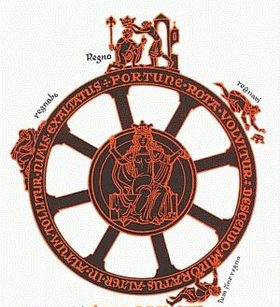
And so, we stand back in silent and reverent awe, humbled and powerless, before the frightful and fantastic visage of Fortuna, Imperatrix Mundi.
Dr. R-- was the chairman of the Department of Music at a well-known college located along the Hudson River, not more than an hour's drive from NYC. I had been referred to him by a professor at NYU who said he would be probably very glad to meet and, at least, know me. I called. He was remarkably friendly after hearing the recommendation from his colleague and said that he was looking forward to meeting me. He even went so far as to say that there was a position available for which I seemed perfectly suited. We set up an appointment for me to visit. Very, very positive.
I mean, this stuff really happened.
1. Dr. R--, stands out on this list, because I had already had experienced so many ridiculously similar events, I no longer thought something like this was possible. I mean, how many times can this kind of thing happen? Quite a lot, apparently, but not to most people. Not to anyone I've known, and not to anyone that anyone that I've ever known, has known. No, this particular set of occurrences seem to be unique to me, and no matter how unlikely a string of events these appear to be, they are, nevertheless true.
And so, we stand back in silent and reverent awe, humbled and powerless, before the frightful and fantastic visage of Fortuna, Imperatrix Mundi.
Dr. R-- was the chairman of the Department of Music at a well-known college located along the Hudson River, not more than an hour's drive from NYC. I had been referred to him by a professor at NYU who said he would be probably very glad to meet and, at least, know me. I called. He was remarkably friendly after hearing the recommendation from his colleague and said that he was looking forward to meeting me. He even went so far as to say that there was a position available for which I seemed perfectly suited. We set up an appointment for me to visit. Very, very positive.
The day of the meeting
arrived. So did the largest blizzard
in over 110 years. Literally, not
since the "Blizzard of '88,"
the blizzard of New York City lore and legend, about which volumes of
books have been written, not since that
storm, had the northeast seen this combination of snow and wind. Dr. R--, good man that he was, called me
first thing in the morning.
"I think we had better postpone our appointment," he said, with a chuckle in his voice.
"I think we had better postpone our appointment," he said, with a chuckle in his voice.
He couldn't commit to a date at that moment but said he would have his secretary call me the following week with a date, which she did. It was for about two months later, steering well clear of winter.
The date of the second
appointment approached so I phoned to confirm. I was told that Dr. R-- was not in, that he was quite ill
and would probably have to call me back in the near future.
After some time I called again, at which time his secretary explained that sadly, Dr. R--- was still quite ill. Judging from the ominous tone in her voice, I gleaned that it was quite serious. Something inside me clicked into place, I don't know how to describe it. But at that moment, I knew I would never meet Dr. R--. I was right.
He left the earth sometime that summer. The position he wished to discuss with me, after all that time, had, of course, long been filled.
After some time I called again, at which time his secretary explained that sadly, Dr. R--- was still quite ill. Judging from the ominous tone in her voice, I gleaned that it was quite serious. Something inside me clicked into place, I don't know how to describe it. But at that moment, I knew I would never meet Dr. R--. I was right.
He left the earth sometime that summer. The position he wished to discuss with me, after all that time, had, of course, long been filled.
*
2. Father P.
This one hurt. The job combined so many of the skills I
possessed, plus possibility of working in spiritual surroundings -- something I
had often dreamed about.
Father P. was the musical Director of the most prominent and important Roman Catholic Church in Manhattan. I had just walked in off the street and went to the Human Resources department, where I met a lovely young Irish lass, Irene, who perked up when she heard I was a musician, conductor, pianist, teacher, etc. "There might be something for you," she said, smiling broadly.
Quickly, she set up an appointment for me. The "first appointment." This was not with Father P, but with someone who worked with him, or somewhere within the music program. He was a very large, jolly middle-aged priest. He treated me in a friendly, polite manner and was thoroughly impressed by my impromptu performance of the last movement of Chopin's B-minor Sonata, which I played on the little piano in his large office.
Things having gone well, I was told I would now be meeting with Father P; a date would be secured, but not right away. In the meantime, he said, I may get a call to meet with someone else. Fine. I'll meet everyone and anyone. I'll meet the Pope if he wants.
The job, as described to me, was a part-time job assisting the "main man" in all manner of the Church's musical business. This included rehearsing the chorus and teaching them new music. I asked about education, that is adult education music classes, and he was very interested. Unbelievable. He was enthusiastic! "Might be a good way of increasing attendance. . ." he said. I couldn't believe my good fortune. I had years experience in such. Finally, a job in my ken, my milieu, using my exact set of unique and quite prodigious skills! I would also have some light administrative work, nothing heavy, usually, just making copies of scores or ordering new ones. Not a big deal. An ape could do that. I asked about education, that is adult education music classes, and he was very impressed by my idea and by the fact that sacred music was an area of specialization for me. Unbelievable. He was even enthusiastic! "Might be a good way of increasing attendance. . ." he said. I couldn't believe my good fortune.
My good fortune, I thought, as I left his office. . . no. . . it couldn't happen again. . . come on. . . I shook off the bad vibes threw my shoulders back and marched into the sunlight on Fifth Avenue.
The "Second Interview," arrived. The large priest greeted me warmly, and again, a pleasant, and hopeful conversation followed, including a brief chat about our favorite Psalms. He and I shook hands, as he assured me to look forward to a phone call.
Father P. was the musical Director of the most prominent and important Roman Catholic Church in Manhattan. I had just walked in off the street and went to the Human Resources department, where I met a lovely young Irish lass, Irene, who perked up when she heard I was a musician, conductor, pianist, teacher, etc. "There might be something for you," she said, smiling broadly.
Quickly, she set up an appointment for me. The "first appointment." This was not with Father P, but with someone who worked with him, or somewhere within the music program. He was a very large, jolly middle-aged priest. He treated me in a friendly, polite manner and was thoroughly impressed by my impromptu performance of the last movement of Chopin's B-minor Sonata, which I played on the little piano in his large office.
Things having gone well, I was told I would now be meeting with Father P; a date would be secured, but not right away. In the meantime, he said, I may get a call to meet with someone else. Fine. I'll meet everyone and anyone. I'll meet the Pope if he wants.
The job, as described to me, was a part-time job assisting the "main man" in all manner of the Church's musical business. This included rehearsing the chorus and teaching them new music. I asked about education, that is adult education music classes, and he was very interested. Unbelievable. He was enthusiastic! "Might be a good way of increasing attendance. . ." he said. I couldn't believe my good fortune. I had years experience in such. Finally, a job in my ken, my milieu, using my exact set of unique and quite prodigious skills! I would also have some light administrative work, nothing heavy, usually, just making copies of scores or ordering new ones. Not a big deal. An ape could do that. I asked about education, that is adult education music classes, and he was very impressed by my idea and by the fact that sacred music was an area of specialization for me. Unbelievable. He was even enthusiastic! "Might be a good way of increasing attendance. . ." he said. I couldn't believe my good fortune.
My good fortune, I thought, as I left his office. . . no. . . it couldn't happen again. . . come on. . . I shook off the bad vibes threw my shoulders back and marched into the sunlight on Fifth Avenue.
The "Second Interview," arrived. The large priest greeted me warmly, and again, a pleasant, and hopeful conversation followed, including a brief chat about our favorite Psalms. He and I shook hands, as he assured me to look forward to a phone call.
I did receive a call to
meet another member of the church hierarchy.
I arrived a bit early on the day of the appointment so I decided to visit my friend at Human Resources. She met me in tears.
"What's wrong?"
"Haven't you heard? It's. . ."
"Father P--," I interrupted, knowing, without knowing why.
"Yes, he's very, very, sick. He's been. . . he's not. . . everything is different."
I arrived a bit early on the day of the appointment so I decided to visit my friend at Human Resources. She met me in tears.
"What's wrong?"
"Haven't you heard? It's. . ."
"Father P--," I interrupted, knowing, without knowing why.
"Yes, he's very, very, sick. He's been. . . he's not. . . everything is different."
Yes, everything was
different alright. Not the least of
which was my job, which had now been reduced to a part time temporary job, not
in the music office. Remarkable, how
these things happen. Yes, I thought of myself first, before Father P's condition. I honestly thought, "Not again," as Irene was crying in front of me.
They did not think I was appropriate for that new position.
I watched the memorial Mass for Father P. on television.
They did not think I was appropriate for that new position.
I watched the memorial Mass for Father P. on television.
*
3. John R W
There are no words to adequately describe my love and admiration for Professor W. He was a man of unlimited brilliance, and possessed a depth of knowledge I still believe impossible for one human brain. He was a gifted musician, composer, and teacher. He was a wreck as a human, however.
Despite all the mean-spirited, and crude things said about JRW, he was to me, always a gentlemen and a good friend. I had helped in out financially when he was going through some terrible phase about God knows what. I didn't care. He was my friend and mentor in many ways.
When I decided to write my Master's Thesis I wanted JRW as my advisor. He accepted, and I went to work. It was difficult, time consuming work. I was not an "academic" writer or much of a thinker, really, and struggled to express myself. Nevertheless, JR was extremely supportive and excited about what I was doing. So much so, that he wrote to a colleague at Stony-Brook about me, saying that he (JR) had no doubt that I would produce a major tome on the works of Frederic Chopin. I still have the letter.
There are no words to adequately describe my love and admiration for Professor W. He was a man of unlimited brilliance, and possessed a depth of knowledge I still believe impossible for one human brain. He was a gifted musician, composer, and teacher. He was a wreck as a human, however.
Despite all the mean-spirited, and crude things said about JRW, he was to me, always a gentlemen and a good friend. I had helped in out financially when he was going through some terrible phase about God knows what. I didn't care. He was my friend and mentor in many ways.
When I decided to write my Master's Thesis I wanted JRW as my advisor. He accepted, and I went to work. It was difficult, time consuming work. I was not an "academic" writer or much of a thinker, really, and struggled to express myself. Nevertheless, JR was extremely supportive and excited about what I was doing. So much so, that he wrote to a colleague at Stony-Brook about me, saying that he (JR) had no doubt that I would produce a major tome on the works of Frederic Chopin. I still have the letter.
Six months into my
research JR disappeared. It was the
summer so it was not impossible that he just took a vacation. But as summer ended I found out that he had
been hospitalized down south, in or near his hometown. His return was not imminent.
After much consternation
and rumination, I thought it would be best to get a new advisor. My only choice was a man for whom I had no,
or little, respect for as a music aesthetician or historian, a key aspect of my thesis. Of course, he was completely non-supportive
of my thesis and had me change the gist of it (to something he was more
comfortable with, I'm sure). This was
a disaster. If I had trouble writing
before, now, it was impossible. He
lost patience, as did I, and, after a particularly ugly interchange, I left the building in disgust never to
return.
A year later, I found myself at NYU enrolled in the MA program for music education a more wasteful way to spend one's money, I've never seen.
A letter came. It was from JR. He was doing much better and was eager to help me. He had heard about my problems with the other advisor and told me not to worry, he was going to get me into a teaching assistant post at Stony-Brook.
My dear Prof. W., sweet, cultured, tortured man that he was, died shortly thereafter rather suddenly while visiting his family down south.
A year later, I found myself at NYU enrolled in the MA program for music education a more wasteful way to spend one's money, I've never seen.
A letter came. It was from JR. He was doing much better and was eager to help me. He had heard about my problems with the other advisor and told me not to worry, he was going to get me into a teaching assistant post at Stony-Brook.
My dear Prof. W., sweet, cultured, tortured man that he was, died shortly thereafter rather suddenly while visiting his family down south.
I miss him terribly
to this day.
Sleep well, JRW. Sleep well.
*
Sleep well, JRW. Sleep well.
*
ADDENDUM
But what other remarkable events shall I share with you? The Chairman of a world famous conservatory of music who, while he was teaching at the college I attended, thought I was one of his most gifted students and who, after not seeing him for twenty years, suddenly became ill and had to retire, after promising to meet me to discuss the possibility of my obtaining a position at the Conservatory? Or, should I speak of Prof. M? Doctor L? How about the conductor at. . . oh, you get the idea.
In 1980 everybody but everybody who was anybody was telling me to learn some computer program, word processing language or whatever it's called. "You'll see! Every office is going to filled with computers!" they said. To supplement my salary while earning the Master's I thought, great, I'll do "temp" work--good paying jobs, flexible hours, etc.-- but first to learn the computer. So I spoke to people in the field and settle on the new, booming, gotta have it, computer language called, "WANG." Remember WANG? Everybody, but everybody who was anybody was shouting:
"Wang!"
All the experts said, "Wang!"
"It's the wave of the future, boy!"
"Wang! Wang! Wang!"
I actually went to a school that taught Wang, exclusively. It was a the way of the future. They guaranteed work, money, women, cars, trips to India, everything. Just sign here. Two-hundred and fifty dollars seemed a small price to pay for all that.
My first job armed with Wang Knowledge was working for the Financial Director of Warner Brothers, on 51st. Not bad. What a nice guy too, a real regular guy. Light work, lots of laughs, barely spent any time on the computer.
That was my last job that employed Wang. You know what happened, don't you? Look it up. Wang. And, like a bad vaudeville sketch, all those experts, were saying:
"Wang?" Are you nuts?
"Nobody's going to be using Wang in a year!"
"Wang! What a joke!
"What's wrong with you? Get out!!!"
You may as well then go ahead and picture me being grabbed by the back collar and being thrown out, landing squarely on my ass, onto the busy New York sidewalks.
In 1990 after a nasty incident with the Chancellor's nephew at Performing Arts High School (which I will discuss later on) I decided to chuck it all and work in the field I would really enjoy: travel. I took a course in Sabre, the travel agents computer program for selling tickets, a must for anyone in travel. Who knew? Once again, all the "experts" said, no, screamed:
"Sabre! You must learn Sabre!"
"You wanna work in travel kid? Learn Sabre."
"Sabre!"
Sabre!"
Once they took my money and I was prepared to attack, those same experts:
"Sabre! What's wrong with you?"
"Idiot! Sabre's old fashioned!"
"Nobody uses Sabre anymore!! Get out! OUT!"
Ass on sidewalk, maybe this time a pigeon craps on my hat. Fade to black. Hal Roach music up.
Never mess with a classic, they say.
* * *
"Curtiss-Wright!" he shouted. "Buy Curtiss-Wright!"
It was from someone whose opinion I trusted, so, I kept an eye on Curtiss-Wright over the next couple of weeks and every day it was up a little more. Then, it went up 10 points, then 5 points, then 6 points!
Finally, with the only money I had managed to save, I purchased as many shares as I could. I was sure I had a winner.
The following day in the Wall Street Journal, Curtiss-Wright Down 15 followed by the words, "Curtiss-Wright suspends trading. . ." A lawsuit was filed by a Japanese company. Then, over the following weeks (I refused to sell and take a huge loss) down 25, down 17, down, down, down.
Most ironic, had a purchased the day before I could have largely minimized or avoided any big loss. Had a waited one more day, I would not have invested. No, I purchased the stock on the absolute singular worst day possible.
Of course.
* * *
But what of the dissolution of programs and institutions that existed, in some cases for 90 years, until, "the curse of J.C---" struck them down. Let's have a quick look at those:
1. A prominent university known world-wide for specializing in diverse and adult education and undergraduate courses, hires J. C -- to teach in their Department of Music and Theater. Aaron Copeland taught there. But after two years, the Chairman was out of a job as the department was dismantled. But so successful had I been, so admired for my work, that several students (adult) wrote long letters of praise to the President of the College! This was one factor in them trying to keep me on in some capacity, which they were able to do. For two years I taught under the auspices of their "Guitar Study Center." Then, that was eliminated. I was switched to the Department of Humantities. The Chairman, a very "faaaaaaaaabulous" guy, did not like that I taught similar courses to his. . .uh. . . never mind. But even without this conflict, the handwriting was on the wall. Music was OUT. Eventually, so was I. I spent a total of 8 years there. But 90 years of this venerated university, providing unbroken, and unyielding courses for. . . *poof!* - disappeared.
2. Another prominent, very very prominent University in the NYC area folds up the Music program in my Division after 50 years. I did manage to teach there to the end, for a total of 5 years and *poof!*
3. A City-wide, much respected "Conflict Resolution and Mediation Training Program," funded by the federal government for seventeen years, is suddenly DE-funded, and six months into my joining the team *poof!*
(note: this followed rather quickly upon the death of Father P. and that whole incident.)
4. I realize that many have been burned by nepotism. But after all this, I mean, come on. The Chairman at a prestigious middle school specializing in music used all his influence within the bureaucracy to have me assigned to the school, so highly regarded by he, was I. After two years the Chancellor's nephew *poof*!
And on, and on. . . .
Now, if you are like most idiots you will say one
of two things: either none of this is
true, some of it is true, or if completely true, is mere coincidence.
Right. Well, fuck you. It is NOT "coincidence." "Coincidence," is having the
same name as someone who is sitting next to you on the subway. "Coincidence," is ordering pizza
three weeks in a row from three different restaurants and having the delivery boy
hit by the SAME cab every week. That's coincidence, okay?
No, these series of events were the work of forces beyond our senses, our reason, or our control. They speak of a power, thoughtful, conscious, or not I do not know; a power which knows of human lives and struggles, and acts upon them, using some yet unknown mechanism.
It has many names, and has been known to men throughout time and in all places of the earth.
Call it what you will -- luck, fate, providence, destiny, whatever -- we who know Her well, who are Her victims, humble ourselves and call Her by name. We prostrate ourselves before Her saying,
No, these series of events were the work of forces beyond our senses, our reason, or our control. They speak of a power, thoughtful, conscious, or not I do not know; a power which knows of human lives and struggles, and acts upon them, using some yet unknown mechanism.
It has many names, and has been known to men throughout time and in all places of the earth.
Call it what you will -- luck, fate, providence, destiny, whatever -- we who know Her well, who are Her victims, humble ourselves and call Her by name. We prostrate ourselves before Her saying,
Omnes Ave Fortuna! Fortuna, Imperatrix Mundi!